
Kimchi Jjigae, a beloved staple of Korean cuisine, is a hearty and spicy stew that captivates palates with its deep, savory umami. Often called Korea’s ‘soul food,’ this comforting dish features perfectly fermented kimchi and tender pork, creating a rich broth that satisfies with every spoonful. Its allure goes beyond simple deliciousness, stemming from the complex flavors and aromas developed through the long fermentation of kimchi. This golden recipe provides detailed tips, making it easy for anyone to master a truly authentic and flavorful Kimchi Jjigae at home. Elevate your dinner table tonight with a warm and spicy bowl of this iconic Korean stew!
Step 1: Gather and Prepare Your Ingredients
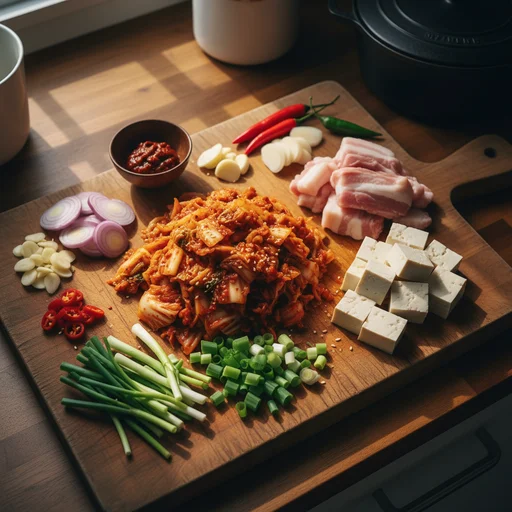
Start by slicing about 1 pound (400g) of well-fermented kimchi into bite-sized pieces. Cut about 7 oz (200g) of pork shoulder or pork belly into similar bite-sized chunks. Slice half a block of firm tofu into thick pieces, thinly slice 1/4 of an onion, and diagonally slice 1/2 a green onion (scallion). Mince 3 cloves of garlic. Having all your ingredients prepped beforehand will make the cooking process much smoother. For the best, deepest flavor in your stew, ensure your kimchi has been fermented for at least one week.
Step 2: Sauté the Pork
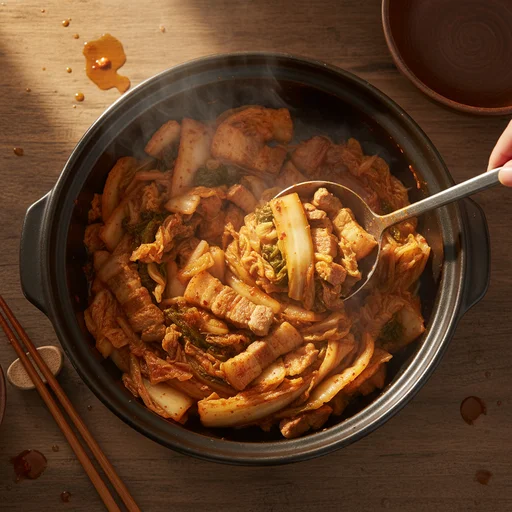
Heat 1 tablespoon of cooking oil in a pot over medium heat. Add the sliced pork and sauté until it turns golden brown. Once the pork is cooked on the outside and its fat begins to render, add 1 tablespoon of minced garlic, 1.5 tablespoons of gochugaru (Korean chili powder), and 0.5 tablespoon of gochujang (Korean chili paste). Continue to sauté for another 1-2 minutes, ensuring the seasonings are well incorporated. This step is crucial for removing any gamey odor from the pork and enhancing the aromatic depth of the chili powder and paste, building a robust flavor base for your stew.

Step 3: Add and Sauté the Kimchi
Once the pork and seasonings are well combined, add the sliced kimchi to the pot and sauté thoroughly for 5-7 minutes. It’s essential to cook the kimchi until it softens and develops a glossy sheen; this process properly extracts its unique deep flavors and characteristic sourness, maximizing the stew’s overall richness. The longer you sauté the kimchi, the deeper the flavor will be. At this point, add 1 tablespoon of gukganjang (Korean soup soy sauce) to season and enhance the umami.
Step 4: Add Broth and Simmer
Once the kimchi is thoroughly sautéed, pour in about 3 cups (700ml) of anchovy-kelp broth (or water). Add the sliced onion and bring the stew to a rolling boil over high heat. Once it starts boiling, reduce the heat to medium-low, add the tofu, and let it simmer gently for 15-20 minutes. This allows all the flavors to meld beautifully. Taste and adjust the seasoning with salt or saeujeot (salted fermented shrimp) if needed.
Step 5: Final Touches and Serving
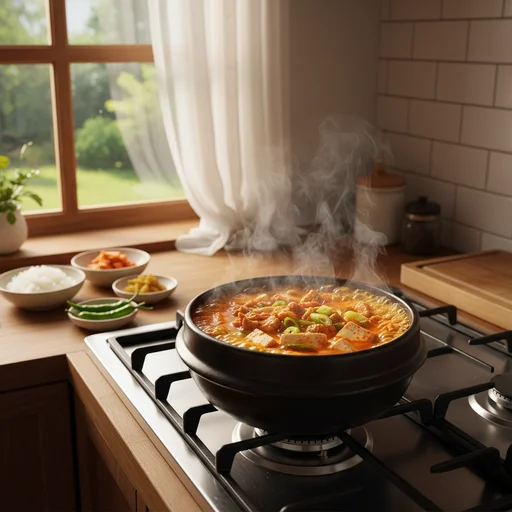
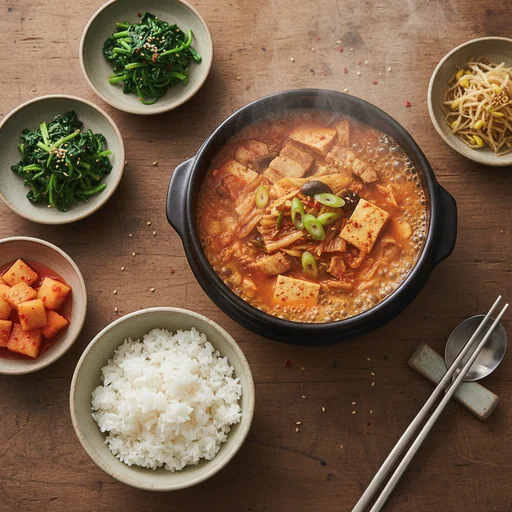
Once the stew has simmered sufficiently and the flavors have melded, add the diagonally sliced green onion (scallion) and cook for another 2-3 minutes to finish. For an even richer taste, you can optionally add cheongyang chili (Korean hot pepper), mushrooms, or ramen noodles. Serve the piping hot Kimchi Jjigae in a traditional earthenware pot (Ttukbaegi) with a bowl of freshly cooked rice for a perfect and satisfying meal. The experience of spooning a ladleful of this delicious stew over warm rice is truly incomparable.
Conclusion
This perfectly crafted Kimchi Jjigae, with its spicy and deeply flavorful broth, will surely warm your body and soul. It’s often called a ‘rice thief’ (밥도둑, bap-doduk) in Korea, a testament to its irresistible charm that makes you devour a whole bowl of rice in no time. We hope this recipe empowers you to confidently create this iconic Korean stew, which might have seemed daunting before. Leftover Kimchi Jjigae can be stored in the refrigerator for 2-3 days and often tastes even better the next day. Feel free to add ramen noodles or other vegetables when reheating for a fresh twist. Enjoy a delightful meal with your loved ones, savoring your homemade Kimchi Jjigae!